


Quick Summary
Smart glass cuts home energy bills by letting windows switch between clear and tinted on demand, which limits solar heat gain when the sun is strong and reduces the cooling work a home’s air conditioning has to do. Its benefit depends on orientation, climate and control strategy, and it works best alongside insulation rather than replacing it.
- Smart glass changes its light transmission on demand, usually with a small electrical signal.
- Lower solar heat gain coefficient means less solar heat enters the room.
- Smart glass can limit solar gain in peak hours, reducing air-conditioning workload.
- Savings depend on climate, orientation and glazing area, so south- and west-facing glass gains most.
- Smart glass is not a substitute for insulation or airtightness and works best as part of a wider upgrade.
Table of Contents
- What Smart Glass Is and How Switchable Glazing Works
- How Smart Glass Controls Solar Heat Gain and Daylight
- Reducing Cooling and Heating Demand in Your Home
- Smart Glass vs Low-E Glass: Which Saves More Energy?
- How Much Smart Glass Costs for Homes and What Affects Price
- Smart Windows for Homes: Climate and Orientation Factors
- Planning Your Smart Glass Installation: Key Considerations Before You Commit
- Frequently Asked Questions
What Smart Glass Is and How Switchable Glazing Works
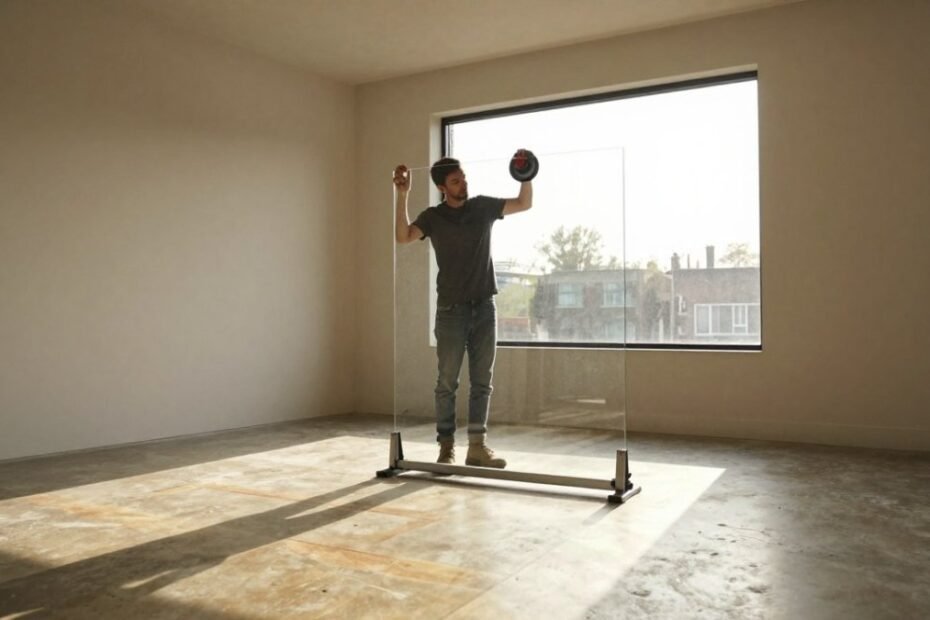
Smart glass is glazing whose light transmission can be changed on demand, usually by a small electrical signal, so a window can go from clear to tinted without a blind or curtain. Smart glass is the umbrella term, and it is also known as switchable, intelligent or dynamic glazing. Compared with traditional glazing, which lets the same amount of light and heat through all day, smart glass lets the building respond to conditions.
Traditional double or triple glazing is designed for insulation, and smart glass adds a control layer on top of that.
Electrochromic and other switchable technologies
Electrochromic glass is the most established switchable technology. A thin stack of coatings sits between two panes, and applying a low voltage moves ions through an electrolyte, darkening the glass. Reversing the voltage clears it again.
Other technologies include suspended particle devices, which use aligned particles that block light when powered, and liquid crystal films, which switch between clear and opaque. Thermochromic glass, which darkens in response to heat rather than to an electrical signal, is a further option, though it has less precise control. Choosing between them comes down to how much tint range, speed and control the project needs.
How Smart Glass Controls Solar Heat Gain and Daylight
Most of the energy benefit of smart glass comes from managing solar heat gain, the heat that sunlight brings into a room through glazing. Unshaded south- and west-facing windows can add a large share of a home’s summer cooling load, and a switchable pane can cut that load by darkening when the sun is strong. To compare products meaningfully, though, you need to look past the marketing and at the standard window-performance metrics.
The metrics that actually determine performance
Three figures do most of the work. The solar heat gain coefficient (SHGC) is the fraction of incident solar radiation admitted through the window, either directly transmitted or absorbed and re-radiated inward; a lower SHGC means less solar heat enters. Visible transmittance (VT) is the fraction of visible light that passes through, so a high VT means more daylight. The U-factor measures how readily heat conducts through the whole window assembly, with lower values indicating better insulation. A smart window is unusual because its SHGC and VT change with state: in its clear state it behaves much like a high-performance conventional unit, and in its tinted state it reduces both solar heat and visible light.
How the switchable technologies compare
Electrochromic glass is generally described as offering a wide tint range, with the amount of visible light admitted varying between the clear and tinted states depending on the product. Suspended particle devices and liquid crystal films each switch in different ways and suit different priorities, such as privacy or glare control rather than solar heat control. Thermochromic glass responds passively to heat, which means its behaviour cannot be overridden.
Daylight, glare and the control strategy
Daylight is the other half of the equation. A tinted window reduces both glare and brightness, so occupants can keep natural light without the discomfort that drives them to close blinds. Because daylight is still admitted at a lower level, the room can use less artificial lighting during the day. The balance depends on the tint level selected and how the glass is controlled. A common pattern is to zone the glazing by orientation and use sensors or a schedule so that west-facing panes tint in the afternoon while south-facing panes stay clearer in winter to admit passive solar warmth.
Where the savings really come from
The energy benefit involves a set of trade-offs rather than a single figure. In summer, a lower SHGC reduces cooling demand; in winter, a higher SHGC and a low U-factor help retain heat. Because smart glass can change state, it can in principle deliver both, but only if the control strategy matches the season and the room’s use. Specifications should always be checked against the room’s orientation, its glazing area and the local climate, and the whole-window U-factor and SHGC should be requested from the supplier rather than inferred from the glass alone.
The article breaks down the three performance metrics that determine how a smart window behaves.
| Metric | What it measures | Lower or higher means |
|---|---|---|
| Solar heat gain coefficient (SHGC) | Fraction of solar radiation admitted | Lower means less solar heat enters |
| Visible transmittance (VT) | Fraction of visible light passing through | Higher means more daylight |
| U-factor | How readily heat conducts through the window | Lower means better insulation |
Reducing Cooling and Heating Demand in Your Home
Smart glass can limit solar gain in peak hours, which may reduce the work an air-conditioning system has to do. Learn how to prevent condensation in glass extensions if temperature and comfort in glazed spaces are a concern.
Heating is more nuanced. A darkened pane still insulates, but it also admits less solar warmth on a cold, sunny day.
Smart glass is not a substitute for insulation or airtightness. It works best as part of a wider fabric upgrade, and the actual saving will depend on the home’s construction, its glazing area and the local climate.
Smart Glass vs Low-E Glass: Which Saves More Energy?
Low-E (low-emissivity) glass is a fixed coating that reflects infrared heat while letting visible light through. It is widely used, inexpensive relative to switchable options, and effective at reducing heat loss in winter and solar gain in summer. Its limitation is that the performance is set when the glass is made.
Smart glass gives adjustable control, which can be useful in rooms that suffer seasonal or time-of-day overheating. Explore smart glass solutions for privacy, glare control and design to see the options available. Where sun exposure is limited, a standard low-E unit may be sufficient. Some projects combine both technologies, using low-E across a building and switchable glazing where control is most useful.
How Much Smart Glass Costs for Homes and What Affects Price
Pricing for smart glass depends on the technology, the size and shape of each pane, the number of zones, the control system and the installation work involved. Pricing depends on quantity, dates and delivery, so readers should request a quote for current figures.
What drives the price
To that you add the control hardware (drivers, sensors, wall switches or app integration), the electrical first fix to each window, the frames and fixings, and the installation labour.
Retrofit versus new-build
In a new-build or extension, smart glazing can be specified as part of the window package, so the incremental cost over high-performance conventional glazing is mainly the glass upgrade and the control wiring. In a retrofit, the economics change: you are replacing otherwise serviceable units, and the electrical work may involve lifting floors or chasing walls.
How to assess payback realistically
Payback is not a single number, because it depends on your baseline. The honest method is to compare the smart glazing against the unit it replaces, using the whole-window U-factor and SHGC of both, then estimate the change in heating and cooling demand for your orientation and climate, and apply current domestic energy prices. Projects with large glazed areas, significant overheating, and air-conditioning or fan use that the glazing could displace may have stronger payback cases. In a mild, cloudy situation with little solar gain, the case may rest more on comfort, glare and privacy than on energy savings alone.
Incentives and compliance
Check what is available at the time of your project. Energy-efficiency schemes and the Building Regulations’ conservation-of-fuel-and-power requirements can affect what specification is acceptable, and some glazing upgrades may qualify for relief or support depending on the scheme in force. Your supplier should be able to confirm the current position and provide the documentation needed for compliance.
Running costs and whole-life value
Ongoing running costs depend on the product and control hardware, and any integration with a home automation system should be factored in. Ask any supplier to break the price down into glass, control, installation and any electrical work, so you can compare like with like, and ask for the warranty terms on the glass, the controls and the installation separately. A per-pane quote that excludes controls, wiring and commissioning is not directly comparable with an installed price.
Smart Windows for Homes: Climate and Orientation Factors
The benefit of smart windows depends heavily on climate and orientation. In a mild, cloudy region, the savings from tinting may be modest. In a region with long, bright summers, or a home with large south- and west-facing glazing, the impact can be considerably greater.
Orientation shapes the strategy. South-facing glass gets strong sun for much of the day, west-facing glass gets intense low-angle sun in the afternoon, and north-facing glass receives little direct sun, so switching usually adds little. A sensible approach maps each opening’s exposure and prioritises the panes that get the most solar load. Your supplier should be able to model this for your location.
Planning Your Smart Glass Installation: Key Considerations Before You Commit
Before committing, confirm the glass specification, the control method and the installation scope. Check that the glazing will meet current building regulations for your project, and that the frames, fixings and electrical supply are suitable for the chosen system. Involve your architect or installer early, as changes after fabrication may be costly.
To request a bespoke glass design quotation, prepare the room dimensions, orientation, intended use and any heritage or planning constraints, then send these to a supplier for a fixed-price proposal. Learn how to request a bespoke glass design quotation step by step. Choosing a reliable contractor matters just as much, so look for demonstrable experience with similar projects, clear responsibility for compliance, and references you can check. Guidance on finding reliable architectural glazing contractors covers what to ask before you hire.
BUTTON: Request a smart glass quote
CARD_TITLE: Is smart glass worth it for your home?
CARD_TEXT: Precision Glass Ltd designs, supplies and installs bespoke smart glazing with fixed-price quotations.
Frequently Asked Questions
How does smart glass improve energy efficiency in a home?
Smart glass changes its light transmission or tint in response to heat, light or manual control, so less solar heat enters a room on bright days. This reduces the load on cooling systems and can help keep rooms more stable through the day. Savings depend on orientation, glazing area, climate and how the glass is controlled, so the realistic benefit varies from home to home.
Is smart glass worth installing in a home?
Smart glass is most worth considering where large glazed areas face strongly towards the sun, where glare or overheating is a problem, or where privacy and daylight control matter. Payback depends on the size of the installation and how much energy and comfort improve. Standard low-emissivity glass may suit projects where solar control is less critical. Precision Glass Ltd offers free expert advice and consultations, and pricing depends on quantity, dates and delivery, so request a quote for current figures.
What is the difference between smart glass and low-emissivity glass?
Low-emissivity (low-E) glass has a thin coating that reflects heat back into a room in winter and limits heat entering in summer, but its performance is fixed. Smart glass can change its tint or light transmission on demand, allowing it to block solar heat when needed and let in light when it is not. Low-E glass offers a fixed level of performance, while smart glass offers adjustable control. Some projects combine both technologies in the same building.
Does switchable glass need electricity to stay clear or opaque?
It depends on the technology. Many switchable glass types need a small electrical charge to change state and may draw power only during the switching process, while some hold their state without continuous power. The exact behaviour varies by product, so the specification should confirm power draw, control method and how the glass behaves during a power cut before installation.
