


Last Updated: October 23, 2026
Quick Summary
To prevent condensation glass extensions, install triple-glazed units with Low-E coatings and warm-edge spacers to keep interior glass surfaces warm, combine this with proper ventilation including extract fans in kitchens and bathrooms plus trickle vents, and ensure professional installation that eliminates thermal bridging.
- Condensation forms when warm indoor air meets cold glass surfaces, most often during winter months when interior temperatures are high and exterior surfaces are cold.
- Triple-glazed units with Low-E coatings and warm-edge spacers significantly reduce condensation risk by minimizing temperature differences between interior and exterior glass surfaces.
- Extract ventilation in kitchens and bathrooms removes moisture at the source, while trickle vents provide continuous background air exchange.
- Interior condensation on glass surfaces is normal and preventable, but condensation trapped between glass panes indicates seal failure requiring unit replacement.
- Proper installation by experienced professionals prevents thermal bridging and air leaks that guarantee condensation problems later.
Table of Contents
- Why Condensation Forms in Glass Extensions
- Understanding Thermal Bridging in Architectural Glazing
- Choosing the Right Glass Specification to Prevent Condensation
- Best Ventilation Systems for Glass Extensions
- Condensation vs Seal Failure in Double Glazing: Know the Difference
- Installation and Maintenance Best Practices
- Frequently Asked Questions
Why Condensation Forms in Glass Extensions
Condensation in glass extensions occurs when warm, moisture-laden air inside meets cold glass surfaces. The glass cools the air to its dew point, causing water vapour to condense into liquid droplets. This happens most often during winter months when interior temperatures are high and exterior glass surfaces are cold.
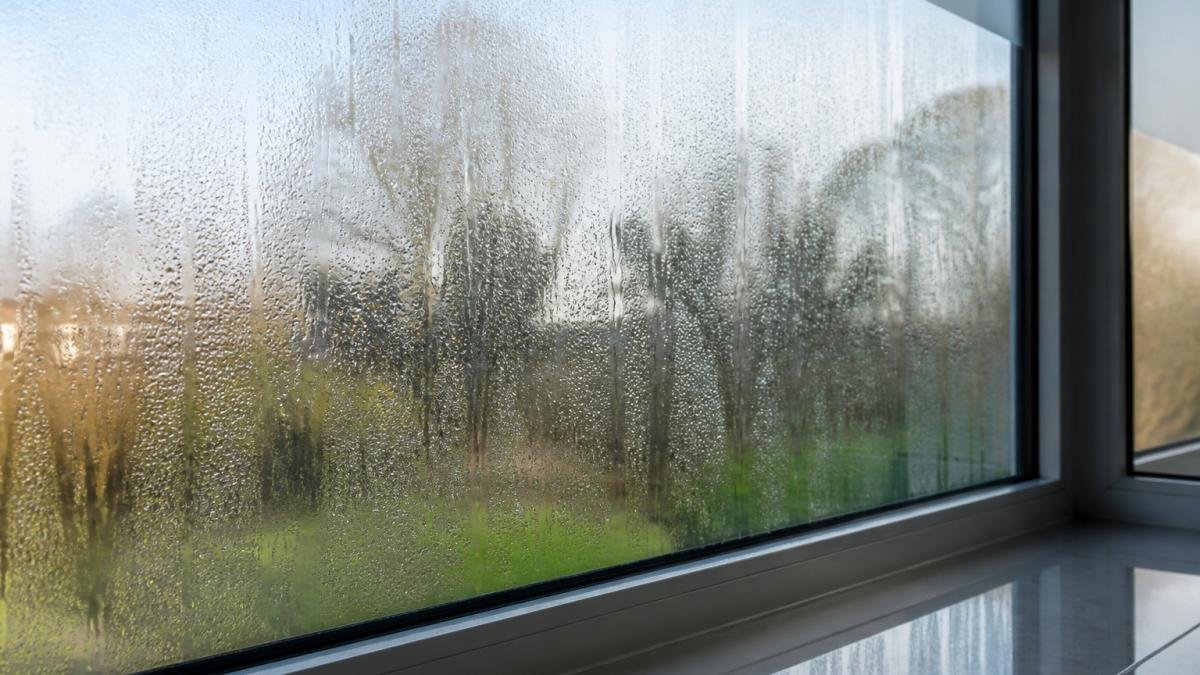
The problem intensifies when several conditions align. Inadequate ventilation traps moisture indoors. Poor thermal performance of the glass allows excessive temperature differences. High humidity from cooking, showering, or drying laundry accelerates the issue. Understanding these root causes helps you choose the right prevention strategy to prevent condensation glass extensions and deliver the luxury result you envision.
The key is recognising that condensation itself is not a defect, it’s a symptom of moisture and temperature imbalance. Addressing the underlying cause prevents years of frustration.
The earliest sign of condensation risk is moisture on the glass on cold mornings. If you notice this pattern, act immediately. Waiting allows moisture to migrate into window frames and structural elements, causing long-term damage.
Understanding Thermal Bridging in Architectural Glazing
Thermal bridging is the transfer of heat through materials that conduct temperature more efficiently than their surroundings. In glass extensions, thermal bridges occur where framing materials, fixings, or structural connections allow cold from outside to penetrate inward, creating cold spots on interior glass surfaces.
A single-glazed window has poor thermal performance. Double-glazed units perform better but still have thermal bridges at the frame edges and corner junctions. Triple-glazed units reduce bridging further, but only if installed correctly with proper spacers and sealing.
The frame material matters significantly. Aluminium conducts heat rapidly and creates pronounced cold spots. Timber and uPVC conduct heat more slowly. Structural steel fixings that pass through insulation layers create concentrated cold zones. These weak points are where condensation first appears.
Luxury glass extensions often use frameless or minimally-framed designs. This aesthetic choice reduces visual obstructions but increases the risk of thermal bridging if not engineered carefully. The glass itself becomes the thermal boundary, and any fixings, structural supports, or edge details must be thermally broken or insulated.
The goal is to keep interior glass surfaces warm, even when outdoor temperatures drop.
Thermal bridging is invisible but measurable. An infrared thermometer will show interior glass surface temperatures 5-10°C colder than the main pane if bridging is present. Preventing condensation means eliminating these cold spots.
Choosing the Right Glass Specification to Prevent Condensation
The glass specification is your primary tool to prevent condensation glass extensions and manage moisture effectively. Different glass types offer different thermal performance levels, and selecting the right one depends on your climate, building orientation, and usage patterns.
Low-emissivity (Low-E) coatings now come as standard on double and triple glazed units. A microscopically thin metallic coating on one glass surface reflects heat back into the room and reduces radiant heat loss, lowering the risk of condensation compared to older uncoated glass.
Triple-glazed units offer superior thermal performance. They create two insulating air gaps instead of one, reducing the temperature difference between exterior and interior glass surfaces. In cold climates or north-facing extensions, triple glazing significantly reduces condensation risk.
Spacer bars between glass panes conduct heat. Warm-edge spacers made from foam or composite materials conduct less heat than traditional aluminium spacers. They reduce cold spots at the glass edges where condensation often forms first.
Heated glass goes beyond the double and triple glazing baseline. Electrically warmed panes keep the inner glass surface above the dew point, so moisture has nothing cold to condense onto. This works even when outdoor temperatures drop sharply or ventilation is limited.
Switchable glass can change from clear to opaque or tinted on demand. Its main purpose is privacy and light control, but it is often specified alongside heated glass in luxury extensions seeking both performance and flexibility.
The right glass specification depends on several factors:
- Building orientation, North-facing extensions need higher performance than south-facing ones
- Local climate, Colder regions benefit from triple glazing, with heated glass for the coldest spots
- Internal heat sources, Kitchens and bathrooms generate more moisture and need better thermal performance
- Ventilation capability, If ventilation is limited, heated glass becomes more valuable
For luxury glass extensions, triple-glazed units with warm-edge spacers already meet the Low-E baseline. Heated glass and switchable glass are the upgrades worth considering beyond that, for extensions facing harsh winters, limited ventilation, or a need for adjustable privacy.
| Glass Type | Thermal Performance | Condensation Risk | Best For |
|---|---|---|---|
| Single-glazed | Poor | Very High | Not recommended |
| Double-glazed (Low-E standard) | Good | Moderate | Standard extensions |
| Triple-glazed (Low-E standard) | Excellent | Low | Cold climates, north-facing |
| Heated glass | Excellent | Very Low | Harsh climates, limited ventilation |
| Switchable glass | Good to Excellent | Low to Moderate | Luxury extensions, privacy control |
Best Ventilation Systems for Glass Extensions
Ventilation removes moisture from the air before it condenses on cold surfaces. Effective ventilation is often the simplest and most cost-effective condensation prevention strategy.
Natural ventilation uses passive air movement through windows and vents. Opening windows for 10-15 minutes daily removes significant moisture, even in cold weather. This works well for occasional moisture events like cooking or showering.
Trickle vents are small openings in window frames that allow continuous low-level air exchange. Modern building regulations require trickle vents in most residential extensions. They provide background ventilation without requiring occupants to open windows.
Extract ventilation uses fans to actively remove moist air from kitchens, bathrooms, and utility rooms. A kitchen extract hood over the cooker removes moisture at the source.
Mechanical ventilation with heat recovery (MVHR) continuously exchanges indoor and outdoor air while recovering heat from outgoing air. MVHR systems maintain fresh air supply without significant heat loss.
Dehumidifiers are portable devices that remove moisture from air. They work well for temporary or localised condensation problems. For permanent solutions in luxury extensions, integrated ventilation is preferable.
Choosing the right ventilation approach depends on your extension’s design and use:
- For kitchens and bathrooms, extract ventilation is essential
- For living areas, trickle vents plus occasional window opening often suffice
- For highly sealed, super-insulated extensions, MVHR is recommended
- For extensions with high moisture generation (swimming pools, saunas), dedicated dehumidification may be needed
Most effective condensation prevention combines multiple ventilation strategies. A kitchen extract hood removes cooking moisture. Bathroom extract fans handle shower moisture. Trickle vents provide background air exchange.
Blocked or undersized extract ducts defeat ventilation systems. Ensure ducts are clear, properly sized, and discharge outside the building envelope. A blocked extract fan provides no moisture removal and may create pressure imbalances that worsen condensation elsewhere.
Condensation vs Seal Failure in Double Glazing: Know the Difference
Condensation on the interior glass surface is normal and preventable. Condensation between glass panes indicates seal failure, a different problem requiring different solutions.
Interior condensation appears on the room-side surface of the glass. It forms when indoor air is warmer and more humid than the glass surface. This is the condensation we’ve discussed, it’s preventable through ventilation, thermal performance, and humidity control. Interior condensation disappears when you wipe it away or increase ventilation.
Seal failure condensation appears between the two glass panes, inside the sealed unit. You cannot wipe it away because it’s trapped inside. Seal failure occurs when the perimeter seal around the glass unit deteriorates, allowing moisture to enter the sealed air gap. Once inside, moisture condenses on the cooler inner glass surface.
Seal failure is caused by:
- Poor installation with inadequate sealant application
- Thermal stress from excessive temperature cycling
- Structural movement of the frame or building
- Manufacturing defects in the sealed unit
- Age-related degradation of the sealant material
Once seal failure occurs, the affected sealed unit must be replaced. The unit cannot be repaired. Partial replacement of just the inner or outer pane is not possible, the entire sealed unit must come out and be replaced with a new one.
How to distinguish between the two:
- Interior condensation, forms on the outer surface, wipes away easily, reappears when humidity is high, disappears with ventilation
- Seal failure, trapped between panes, cannot be wiped away, permanent appearance, indicates the unit is defective
If you notice condensation between panes in a new installation, contact your installer immediately. This is a warranty issue and the unit should be replaced at no cost. Seal failure within the first 5-10 years indicates either poor installation or a manufacturing defect.
Interior condensation is normal and manageable. Condensation between panes is a defect. Understanding the difference prevents unnecessary alarm and helps you identify genuine problems early.
Installation and Maintenance Best Practices
Proper installation prevents many condensation problems before they start. Poor installation creates thermal bridges, air leaks, and structural issues that guarantee condensation problems later.
Correct frame installation means the frame sits flush against the building structure with consistent support. Gaps or voids under the frame allow air movement and thermal bridging.
Sealant application is critical. The perimeter seal around the frame must be continuous and properly cured. Gaps in sealant allow air and moisture infiltration.
Flashing and drainage direct water away from the frame. In extensions with exposed frames, proper flashing prevents water from entering the frame cavity.
Ventilation installation must be done correctly. Extract ducts must be properly sized and routed to the exterior. Trickle vents must be unobstructed.
Maintenance preserves performance over time. Regular cleaning of glass and frames keeps drainage paths clear. Sealant should be inspected annually for cracks or deterioration.
When you work with Precision Glass Ltd, installation is handled by our experienced in-house team.
| Maintenance Task | Frequency | Impact on Condensation |
|---|---|---|
| Clean glass and frames | Monthly | Keeps drainage clear, prevents water pooling |
| Inspect sealant | Annually | Detects early seal deterioration |
| Check trickle vents | Quarterly | Ensures background ventilation works |
| Test extract fans | Quarterly | Confirms moisture removal from kitchens/bathrooms |
| MVHR filter change | Every 6-12 months | Maintains ventilation efficiency |
| Professional inspection | Every 2-3 years | Identifies problems before they become serious |
Preventing condensation in luxury glass extensions requires a coordinated approach. Start with the right glass specification, triple-glazed units with Low-E coatings deliver excellent thermal performance.
Condensation is preventable. The extensions that suffer from chronic condensation are those where these principles were overlooked.
Frequently Asked Questions
Why does condensation form on the inside of my glass extension?
Condensation occurs when warm, humid air inside your extension meets cold glass surfaces. During winter, the interior air holds moisture from cooking, bathing, and occupancy. When this air contacts glass that is colder than the dew point temperature, the moisture condenses into visible water droplets. This is particularly common in glass extensions because glazing conducts temperature more readily than solid walls, creating larger cold surface areas where condensation can form.
Is condensation in a glass extension a sign of poor installation?
Not necessarily. Condensation is a natural physical phenomenon, not automatically a sign of installation failure. However, excessive or persistent condensation may indicate inadequate ventilation, insufficient thermal performance in the glass specification, or thermal bridging through frames. Poor sealing during installation can also allow cold air infiltration, lowering glass surface temperature. A properly specified and installed extension with appropriate ventilation should minimise condensation, but some surface moisture on very cold mornings is normal and does not indicate defective work.
What is the difference between condensation and seal failure in double glazing?
Condensation appears as temporary moisture on glass surfaces that wipes away easily and does not leave marks. Seal failure is permanent: moisture becomes trapped inside the sealed unit between the two glass panes, creating a persistent cloudy or misty appearance that cannot be wiped away. Seal failure indicates the perimeter seal has broken, allowing air and moisture ingress. Condensation on the room-facing surface can be managed through ventilation and thermal design; internal seal failure requires unit replacement and signals a defect in the glazing itself.
Do ventilation systems effectively stop condensation in glass extensions?
Yes, when properly sized and used. Ventilation removes humid air before it can condense on cold surfaces. Mechanical ventilation with heat recovery (MVHR) is most effective: it extracts moist air and replaces it with fresh air whilst retaining heat energy. Passive ventilation through trickle vents and opening windows also works but is less reliable in winter when occupants are reluctant to open windows. The key is matching ventilation capacity to the moisture load generated by occupancy, cooking, and bathing. Without adequate ventilation, even high-performance glazing will show some condensation.
